
Rabbi’s Message – May 18, 2023

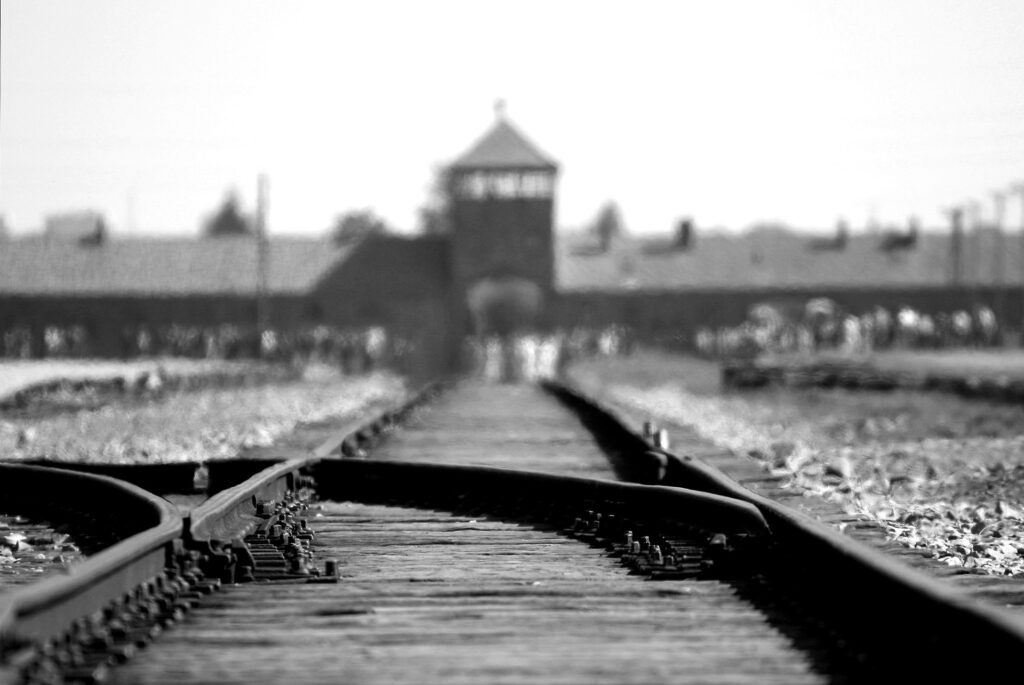
Last night I had the pleasure to be at the opening of the Americans and the Holocaust exhibit at the Dayton Metro Library. We are the only library in Ohio and one of only 50 libraries chosen to receive and display it. It is an honor that we have been chosen and we hope our community takes advantage of it being here through participating in docent-led tours and other related programs. It will be on display from today through June 21, 2023.
This unique collection offers insight to the context of American history leading up to and during the period of the Nazi regime. We know the depth of horror and crimes during the Holocaust, but as history unfolded, Americans did not. This chronological exhibit reminds us of the backdrop of American culture at the time. We forget sometimes that here in the United States we were responding to the Holocaust as it was happening, which was in the aftermath of the Great Depression, WWI, and rising anti-Semitism.
But it also reminds us that we can’t let Americans off the hook that easily. This exhibit debunks the claim that Americans didn’t act sooner because we didn’t know anything about the Holocaust. It demonstrates that early on we were very interested in Hitler’s regime and had a clear understanding of the role of anti-Semitism in that movement. While there was no sustained anti-Nazi movement during that time, there is proof of anti-Nazi actions in the early 1930s, such as rallies and protests to boycott German goods. Through public opinion polls we learn that even though Americans greatly opposed Hitler, we were filled with fears about another Depression, slow economic recovery, losing jobs to immigrants, and German spies. Figures such as Father Charles Coughlin and Charles Lindbergh fueled these fears as they spewed anti-Semitic tropes and advocated to restore America to the Americans. One display at the exhibit points out how two weeks after Kristallnacht, 94% of polled Americans disagreed with the treatment of Jews in Germany, yet 71% still believed we still should not act. Fortunately, we see that there continued to be a few outspoken voices, such as Dr. Seuss, who publicly attacked the Nazis and opposed Americans who spread their propaganda.
This exhibit will help us ask important questions, such as: What did we in the United States understand about the Holocaust? What did we see as our responsibility? What can we learn from this experience?
I hope that each of us will have the opportunity to explore these questions and more by taking advantage of having this exhibit in Dayton. If you are interested in seeing this is a group we encourage you to join us on Thursday, June 15 for a docent led tour followed by a special immigration presentation called Belonging versus Othering, or feel free to attend the Jewish Cultural Festival educational session on June 11 at 12:30PM with Jayne Klose and Bonnie Beaman Rice.