
Community at Temple Israel
Rabbi’s Message – August 13, 2026

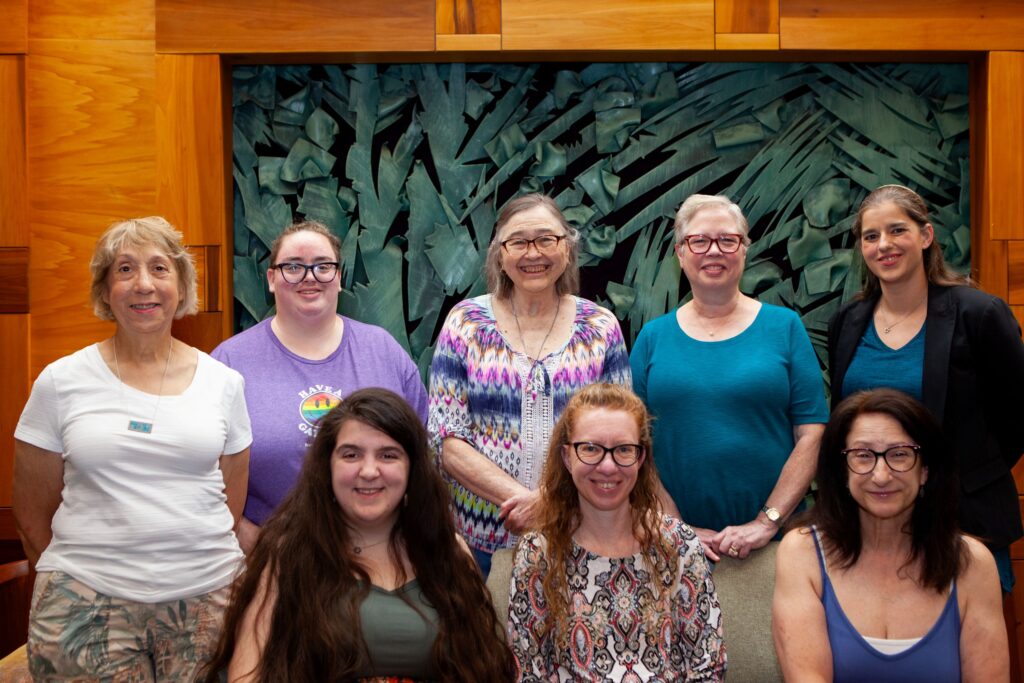
Usually when I have a first meeting for a b’nei mitzvah student, it is with a tween and we take a moment to talk about the why of celebrating becoming Bar/Bat/Bet Mitzvah. On a Monday in October, I gathered with around a dozen folks on Zoom and in the Library who had expressed interest in celebrating this milestone as adults. While perhaps equally intimidated by Hebrew and reading from the Torah scroll as many of my tween students are, this group all shared a deep personal commitment to Jewish learning. This being the first Adult B’nei Mitzvah group I’ve worked with, I didn’t quite realize just how deeply powerful that communal sense of “opting in” to this experience would permeate the whole journey. I do now.
Historically, B-Mitzvah (shorthand for all the gender- and singular/plural variations), was the legal age of majority in the Jewish community, and likely coincided with average ages of the onset of puberty: 13 for males, 12 for females. Akin to an 18-year old in the United States having voting rights and such regardless of if they had a big birthday party, so too, once a youth reached this age, the obligation of fulfilling mitzvot (commandments) became incumbent on them. In fact, there is a historical blessing that parents would recite that essentially functions to say, Thank God this child’s errors are no longer my responsibility, and they are accountable for their own actions now. As Jews, we love marking transitions; it comes as no surprise that a ceremony around becoming B-Mitzvah developed as a means of simultaneously celebrating the milestone as well as demonstrating one’s readiness and eagerness to fulfill their “new” obligations and ability to lead the community.
And here comes one of my favorite teachings about the grammar of B-Mitzvah: while the most basic literal translation is “son/daughter/child of the commandments” the meaning is deeper. A “child of the house” really means a member of the household, or as I was taught, someone who doesn’t have to knock before entering – not necessarily limited to just the “official” residents of the house. In a similar way, B-Mitzvah can be understood as those who feel connected to, at home with the Mitzvot, the commandments. In this way, the sense of ownership and accountability are felt more strongly in the term.
And so it is with our adult group: their religious obligations aren’t suddenly changing because they completed this course of study – but they are publicly demonstrating what is in their hearts: that this is the religious life they are choosing, and with this community. It has been an incredible honor to work with our Adult B-Mitzvah group. I hope that you will join them in celebrating on Saturday, August 15 as they lead us in worship. I also think it is highly appropriate that they are celebrating this milestone as we kick-off our academic year programs for religious school and adult education: what a wonderful way to reinforce for our youth and adults that Jewish learning is essential at all ages!