

by Scott Halasz
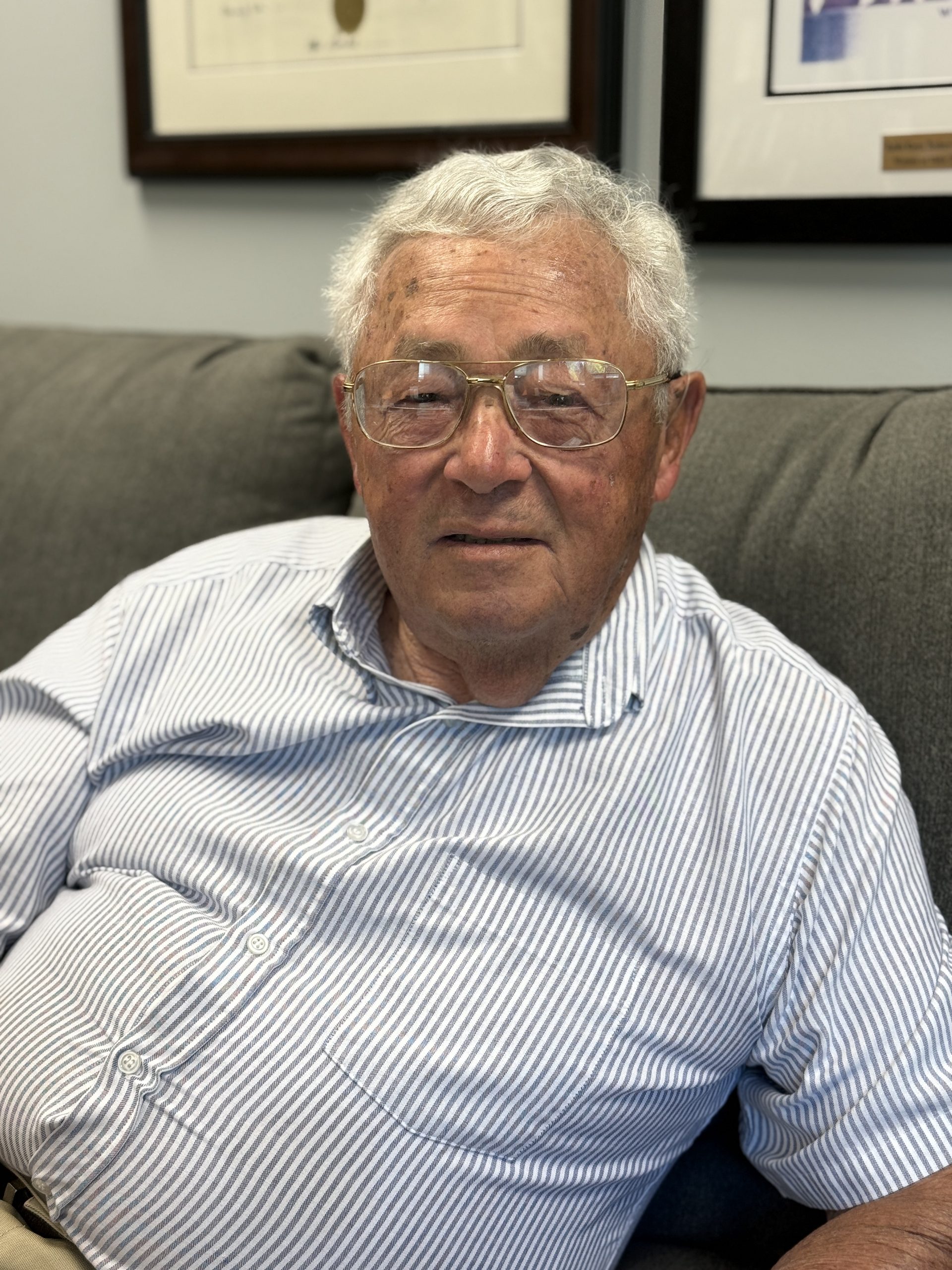
Anniversaries are usually something to celebrate. For longtime Temple Israel member Larry Katz, however, November 22 is a solemn date that carries a painful, lasting memory.
On that day in 1942, 14 members of his extended family—from the Katz, Dlot, and Fishman families—were killed by the Nazis in Postavy in the small eastern Belarus town of Postavy during the Holocaust. They were cousins, aunts, uncles, and a grandfather. A 15th family member also died during this time, though the exact date remains unknown.
If not for the incredible foresight of his mother, Anna, Larry could have shared the same fate.
After Germany started the war with the Soviet Union on June 22, 1941, Anna made the courageous decision to leave and head east. Despite her many pleas, no other family members wanted to join.
“My mother tried to get her sister and other family members to run with us, but everybody had their own excuse for not leaving their home,” Larry recalled.
She could not convince them that Germany was killing Jews. Some dismissed the warnings as “Communist propaganda” and refused to believe the Germans had changed since the previous world war.
With Larry’s father, Lewis, required to stay behind with other men at a selective service center, Anna and five-year-old Larry set off alone. Carrying nothing but the clothes on their backs and prayers for safety in their heads, they stayed a day ahead of the advancing German army.
“We just ran for our lives,” Larry said. “We were making like 50 kilometers a day.”
Staying on the main road, they pushed their horses to the limit, stopping only to feed them at night before setting out again the next morning. Remarkably, a couple of months later, they were unexpectedly reunited with Lewis—who had been released from his military obligation—on a highway in Polotsk. The three stayed together from then on.
Eventually, as Larry and his parents approached Moscow, authorities told them they were no longer allowed on the main road because they were the only refugees remaining. Given the choice between taking a train east to Siberia or southeast to Uzbekistan, they chose Uzbekistan, where they stayed for the remainder of the war.
Life there didn’t get much better. Surrounded by strangers, they never knew whom they could trust or if they were still being followed. People were starving left and right, and many lined up as early as 9 p.m. the night before just to get bread the next morning.
“Somehow we survived,” Larry said. “You get used to everything.”
Though he was only five years old when he began fleeing the Germans, Larry still recalls every detail as if it happened last week.
“I remember everything from those years,” he said. “I may not remember what I had for breakfast, but I remember all of that stuff.”
It wasn’t until 1945 that Larry learned the tragic news about the relatives he had left behind.
After World War II ended, his family got their house back and lived in the Soviet Union until 1958. Once the Hungarian Revolution ended, people from the Soviet Union were finally allowed to leave for Poland—a move Larry and his parents knew would eventually allow them to head west to the United States.
With his father’s brother living in Illinois and his mother’s two brothers and sister living in Ohio, the family made their way to America. After spending time in Illinois, Larry came to Ohio and settled in Dayton. In July 1968, he joined Temple Israel, where his second wife, Natalie, was a member.
Today, Larry continues to live here in Dayton as an active member of the Temple. Though decades and thousands of miles separate him from the highways of Belarus and the bread lines of Uzbekistan, every November 22 brings those vivid memories back—honoring the 15 relatives who were lost, and bearing witness to the mother whose courage gave him a future.